

Becoming a Midwife – Midwife Courses Ireland
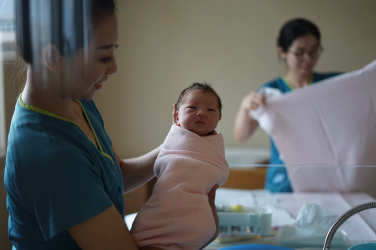
Midwifery is a profoundly rewarding career that requires a holistic, compassionate approach conducive to bringing a newborn into the world. Beyond the formal qualifications, being completely caring, calm, and possessing a genuine willingness to help others are essential prerequisites. The term midwife means to be ‘with woman’, and your role is to support a mother throughout her pregnancy, labour, and the postnatal period.
Midwifery care is underpinned by a philosophical approach that views pregnancy as a normal, healthy event in the life cycle. According to the Nursing and Midwifery Board of Ireland (NMBI), the concept of partnership between the woman and the midwife is fundamental to practice and is based on mutual trust, support, and collaboration. Midwives also work closely with obstetricians and other members of the healthcare team, particularly when providing care to women with complicated pregnancies.
What Does a Midwife Do?
A midwife is a highly trained professional with special expertise in supporting women to maintain a healthy pregnancy and birth. They offer expert, individualised care, education, counselling, and support to a woman and her newborn throughout the childbearing cycle. A midwife works with each woman and her family to identify their unique physical, social, and emotional needs. When the care required falls outside the midwife’s scope of practice, the woman is referred to other healthcare providers for additional consultation.
A midwife is assigned a range of specific duties, from assisting the mother during childbirth to introducing the newest member of the family. A given day in the life of a midwife can include:
-
Assisting maternal patients to find physical positions that facilitate childbirth.
-
Monitoring maternal and fetal conditions during labour by checking vital signs and monitoring uterine contractions.
-
Providing comfort and relaxation measures for mothers in labour through interventions such as breathing techniques, hydrotherapy, and massage.
-
Setting up and monitoring the administration of oxygen or medications.
-
Conducting ongoing prenatal health assessments and tracking changes in physical and emotional health.
-
Developing and evaluating individualised plans for midwifery care.
How to Become a Midwife: Educational Routes
There are several Higher Education Institutions (HEIs) in Ireland offering a direct-entry, four-year BSc (Hons) Midwifery (or Bachelor of Midwifery Science) degree. These programmes are open to standard Leaving Certificate students, QQI applicants, and mature students.
For example, the University of Galway offers a highly regarded four-year Bachelor of Midwifery Science degree. Following the successful completion of an NMBI-approved programme, graduates are eligible to apply to register as a midwife with the NMBI.
The syllabus for a pre-registration Honours Degree programme blends theory with hands-on clinical practice. You will study the biological and social sciences (including psychology, sociology, and ethics), alongside the art and science of midwifery practice. Clinical placements are a massive component of the degree, covering all aspects of the role across Antenatal, Intra-natal, Postnatal, and Specialist care settings.
Navigating CAO, QQI, and Mature Entry
-
Leaving Certificate (Standard CAO): Applicants must meet specific matriculation requirements, which include a laboratory science subject. CAO points for Midwifery are highly competitive.
-
PLC Healthcare Routes (QQI Level 5): If you don’t secure the required CAO points, alternative pathways are available. Completing Pre-Nursing courses or specific PLC healthcare routes (such as a QQI Level 5 in Nursing Studies or Healthcare Support) can act as a stepping stone (View nursing courses on Findacourse). Many universities reserve a quota of places specifically for QQI applicants who achieve distinctions in their modules.
-
Mature Applicants: If you are 23 or older by January 1st of the year of entry, you can apply as a mature student via the CAO. You must successfully complete the NMBI Assessment Test (administered online), which typically includes verbal reasoning, numeracy, and a job simulation exercise. Note that passing the assessment does not guarantee a place, as offers are highly competitive based on available quotas.
-
Post-Registration Route: If you are already a registered general nurse, you can undertake an 18-month post-registration Higher Diploma in Midwifery to become a qualified midwife.
Is Midwifery Right for You?
Like any healthcare career, it is crucial to do your homework. Get some practical experience if you can—working or volunteering as a Healthcare Assistant [Insert Link to Healthcare Courses Category Here] is a fantastic way to see how you feel about working in a clinical environment.
Attending university open days is also highly recommended. Here, you will get a real feel for what the course is like on a day-to-day basis and have the opportunity to meet the lecturers. Even better, try to arrange a chat with a practicing midwife who can answer your questions about the realities of the job. And yes, men can absolutely become midwives too!
For further information on registration and approved courses, contact the Nursing and Midwifery Board of Ireland (NMBI) or view their website at www.nmbi.ie.
To see midwife and nursing courses on Findacourse.ie view the Medical and Healthcare course listings on Findacourse.ie.

Nursing Courses – Routes and Requirements
There are a number of different nursing routes available when becoming a registered nurse in […]


Online Healthcare Courses
Healthcare in Ireland continues to face a myriad of challenges, including high rates of obesity […]

Medical Secretary and Administration Courses
Medical administrators and secretaries play an important role in the successful operation of medical or […]
Nursing Studies and Pre Nursing PLC Courses
PLC or Further Education Pre-Nursing courses are an ideal pathway into the profession, particularly for Leaving Cert […]